
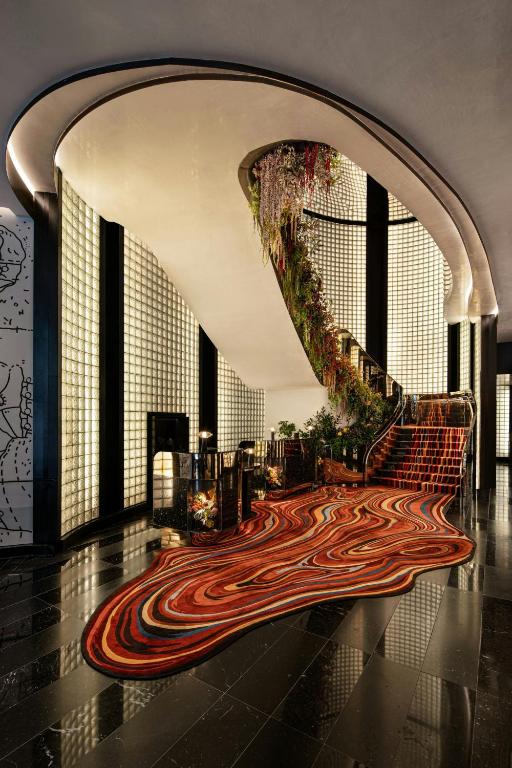
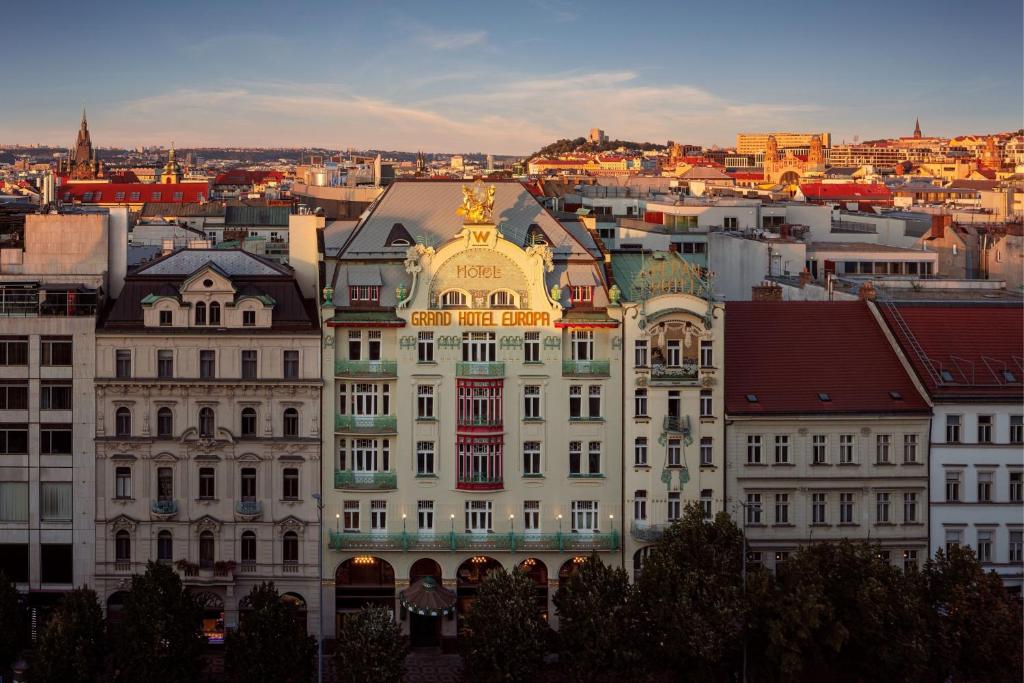
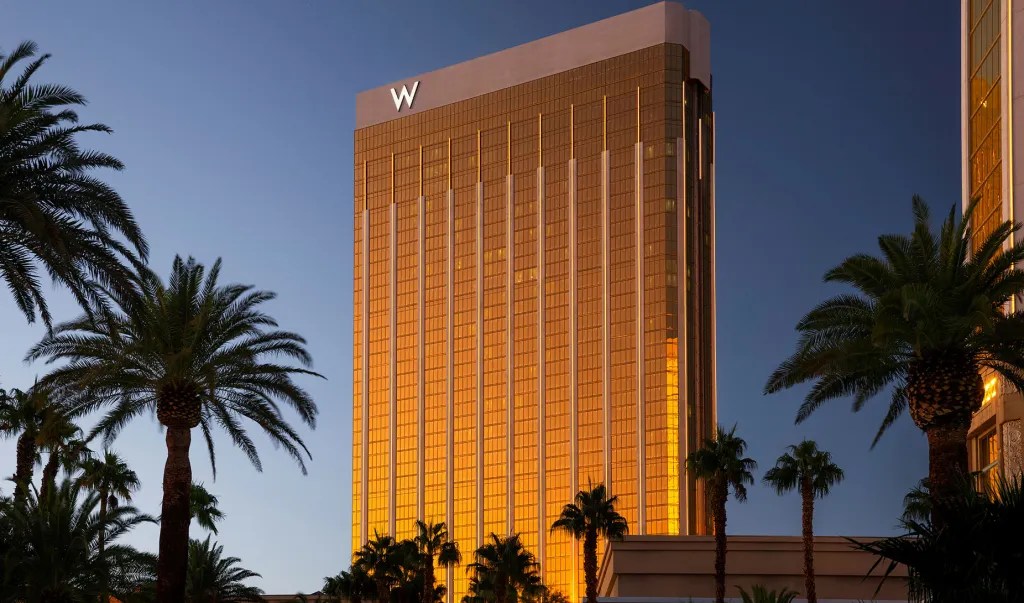
W Hotels is back in the spotlight, thanks to the fresh redesigns of its flagship New York–Union Square and Hollywood properties, plus the jaw-dropping W Prague housed in the iconic Art Nouveau Grand Hotel Europa. The brand also claimed the Mondrian Las Vegas, which recently joined the W family. Years ago, W Hotels was on a roll with rapid expansion, only to see many locations leave the system, leaving W New Orleans–French Quarter as the final one in that region. Now, with these high-profile openings and conversions, W Hotels seems poised for a bold comeback. Let’s see if the brand reconnects with the daring spirit that made it such a star in the first place.
From the moment W Hotels debuted in New York City in 1998 (originally under Starwood Hotels & Resorts), the brand sparked a revolution in the hospitality world. Now part of Marriott International, W became known for its blend of bold design, vibrant social scenes, and forward-thinking amenities. However, recent years have seen a wave of W Hotels exiting the portfolio, causing many to wonder whether W remains the go-to lifestyle brand it once was.
A Series of High-Profile Exits
- Paris Opera: Once an emblematic European flagship, the hotel left the W system in 2020, with no announcements on a new operator.
- New Orleans: Once boasting two locations in the city, one is now Le Méridien, and the remaining W recently switched to Renaissance.
- Sydney: One of the earliest W’s, in Sydney at the Woolloomooloo finger pier became the Blue Hotel in 2007, operated by Indian giant Taj Hotels and now is an Ovolo Hotel, a boutique brand from Hong Kong. In 2023, a brand-new, 593-room W Hotel opened at Darling Harbour.
- Seoul: The W at Walkerhill became the Vista Hotel in 2017.
- Unrealized Openings: W-branded projects in Milan and Athens never materialized under the W flag, ending up as a Six Senses and a Four Seasons, respectively.
- Overcrowded Markets: In Atlanta, there were three W Hotels, but Midtown transitioned to a Curio Collection by Hilton—now The Starling—while Buckhead shifted to Marriott’s Autograph Collection, rebranded as Hotel Colee. Only W Atlanta Downtown remains.
- Dubai: Maybe three W’s is also too much for Dubai, the W in the Al Habtoor City hotel complex is now Hotel V, Curio Collection by Hilton.
- San Diego: The W San Diego fell into foreclosure and is now the Hotel Republic, Autograph Collection, after a stint being a Renaissance Hotel.
- New York Closures:
- The world’s very first W (the former Doral Inn on Lexington) opened in 1998 and left the system after two decades, becoming the Hotel Maxwell, which subsequently shuttered. It’s rumored to soon reopen under a new owner.
- W New York Downtown, opened in 2010, closed in 2022 and now trades as The Washington by LuxUrban under Wyndham’s Trademark Collection. Interestingly, much of the interior design—and the prized World Trade Center views—remain intact.
- W Washington: This property in the nation’s capital reverted to its historic 1917 name, Hotel Washington, marking another notable departure.
The W DNA: Design, Service, and Social Scene
Design and Atmosphere
Historically, W’s aesthetic has been a core strength—no two properties are the same. Instead of a traditional lobby, W offers a “Living Room,” a social space marked by modern decor, curated music, and a local twist. This approach, pairing the brand’s signature edgy design with cultural elements, carved out a niche for travelers seeking more than just a room.
Whatever/Whenever Service Philosophy
Central to the W experience is the famous “Whatever/Whenever” service, promising guests nearly anything on a whim—like last-minute concert tickets or a surprise party at midnight. This high-touch, high-energy service model once set W apart as a bold, lifestyle-focused trailblazer in the industry.
Social Hubs and Signature Spaces
W’s bars and restaurants often attract both guests and locals, helping maintain an up-all-night vibe. Rooftop WET decks, AWAY Spas, and stylish communal areas further cemented W’s image as a social hot spot where visitors are as likely to network as they are to dance the night away.
What’s Behind the Exits?
Given these unique selling points, why have so many W Hotels departed the brand? In some cases, market oversaturation may have played a role, as seen in Atlanta with three W properties competing. Economic factors, owner decisions, and changing travel trends have also contributed. Properties sometimes find a better fit under a different hospitality flag, especially when they’re aiming for a broader or more traditional guest base.
In other instances, owners might feel that W’s lifestyle focus doesn’t resonate with local travelers or that the brand’s operational costs are too high. The pandemic brought additional challenges, with reduced corporate and event travel hitting lifestyle brands that relied on social gatherings.
Looking Ahead: Reinvention or Fade-Out?
Despite the wave of departures, W Hotels continues to operate in major global cities and sought-after resort destinations. Marriott appears committed to evolving the W brand by updating design standards, focusing on sustainability, and exploring new markets. For W loyalists, existing flagship properties still offer the brand’s trademark nightlife scene, eclectic design, and “Whatever/Whenever” service.
The question “Is W Hotels still hip?” remains open. As travel preferences evolve—leaning toward authenticity, wellness, and local experiences—W faces the challenge of proving it can stay ahead of the curve. The brand’s original promise of delivering edgy yet upscale stays may need fresh interpretation to remain relevant, especially as many guests now look for hotels that blend local culture, sustainability, and community engagement with lifestyle flair.
In the end, W is at a crossroads: It can leverage its bold roots and storied history of innovation to regain its position as the trendsetter for modern hospitality, or risk being overshadowed by new boutique competitors that prioritize local authenticity and lower operational costs. Whether W’s next chapter is one of reinvention or gradual retreat will depend largely on how effectively it adapts to the changing tastes of today’s traveler—and whether property owners continue to buy into the brand’s high-energy, high-design ethos.
 DOUBLEDOWN Hotels
Leave a comment