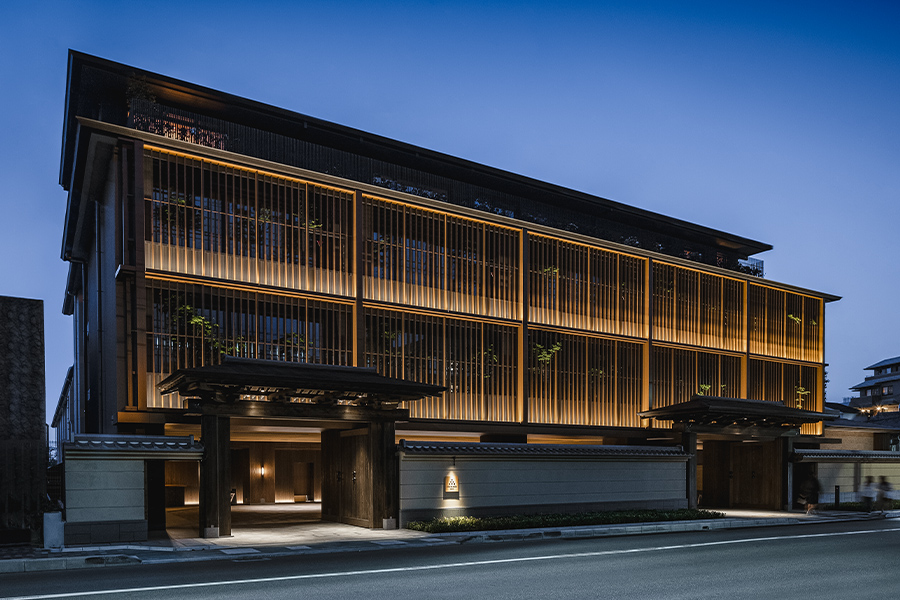
Where Tradition, Innovation, and Architecture Converge
Kyoto’s hospitality scene has entered a golden age. From adaptive reuse projects and architectural pilgrimages to futuristic capsules and art-driven sanctuaries, the city now offers a spectrum of stays that mirror its dual identity: timeless and ever-evolving. Here, we spotlight the city’s most design-forward hotels—each one a chapter in Kyoto’s story of heritage and reinvention.
Check out the full listings on DNA Hotels: https://dnahotels.com/tag/kyoto/
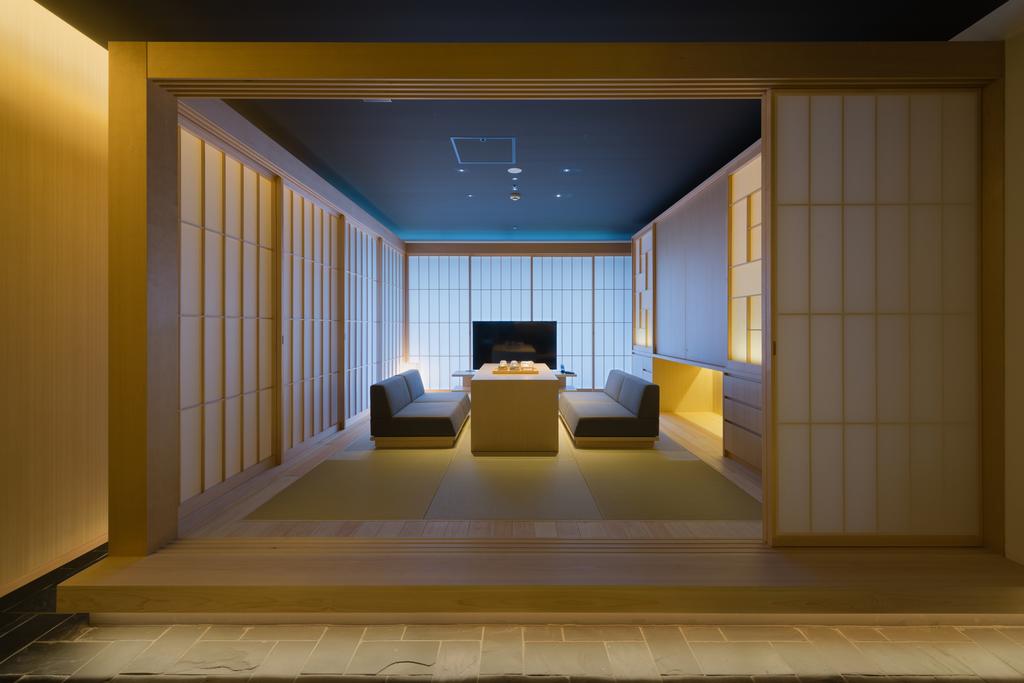
Hotel Kanra Kyoto — Craft and Authenticity
Housed in a repurposed schoolhouse, Kanra balances elegance and intimacy. Tatami floors, Kiyomizu-yaki ceramics, and local craft details create a stay that feels authentically Kyoto, while modern refinements elevate tradition without diluting it.
DNA Hotels Verdict: A cultural immersion where history and craft define the architecture.
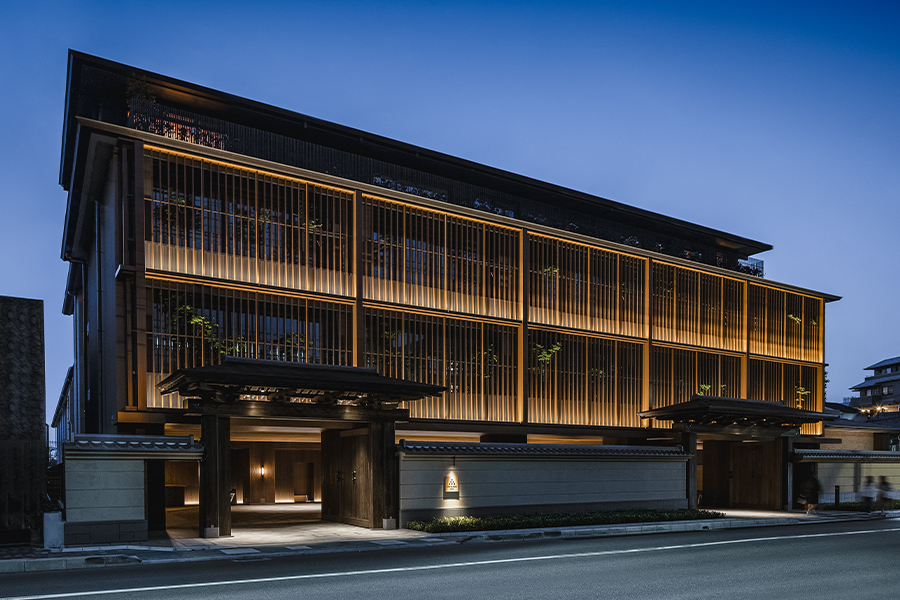
Six Senses Kyoto — Mindful Minimalism
Kengo Kuma protégé Shimizu Kentaro creates sensory sanctuaries inspired by Heian-period architecture. Natural textures, lantern-like lighting, and karesansui gardens frame a stay rooted in mindfulness and restraint.
DNA Hotels Verdict: Architecture as meditation—Kyoto’s quietest luxury statement.

SOWAKA — Teahouse Reborn
In Gion, architect Shigenori Uoya revives a historic teahouse into a ryokan-inspired hideaway. Tatami, lantern-lit corridors, and oval windows frame moss gardens, while subtle modern touches nudge heritage forward.
DNA Hotels Verdict: Intimate and poetic, SOWAKA distills Kyoto into tactile experience.
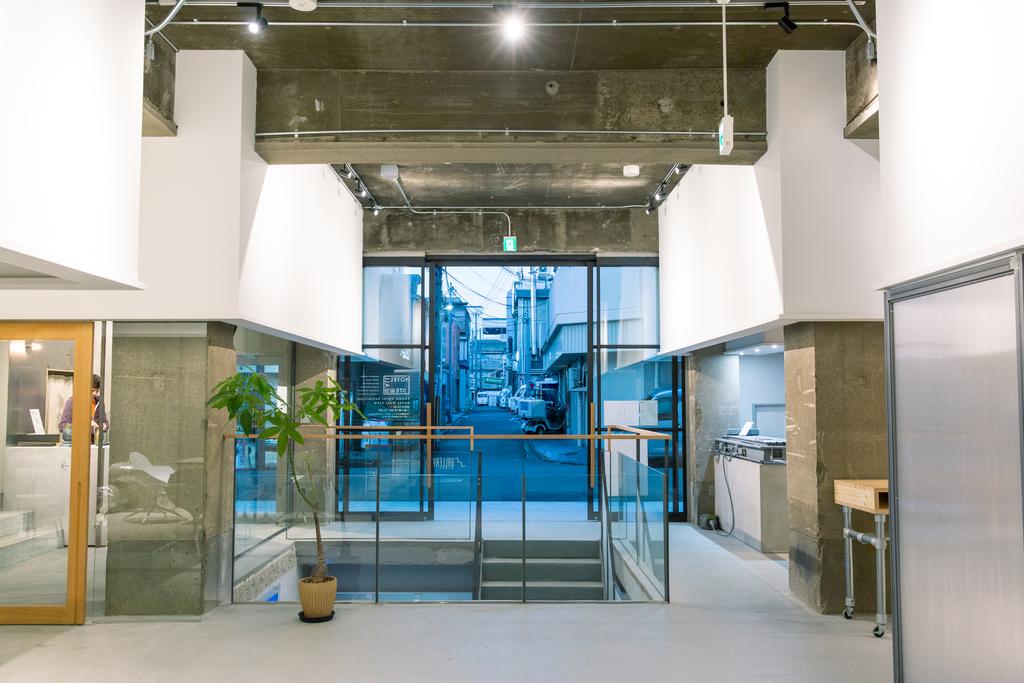
KAGANHOTEL — Artist’s Incubator
Part hostel, part co-living hub, part artist-in-residence, KAGANHOTEL is raw and experimental. Minimalist bunks and studios upstairs keep the focus on creativity, with the building doubling as gallery and cultural stage.
DNA Hotels Verdict: Hospitality as community—Kyoto’s boldest creative experiment.
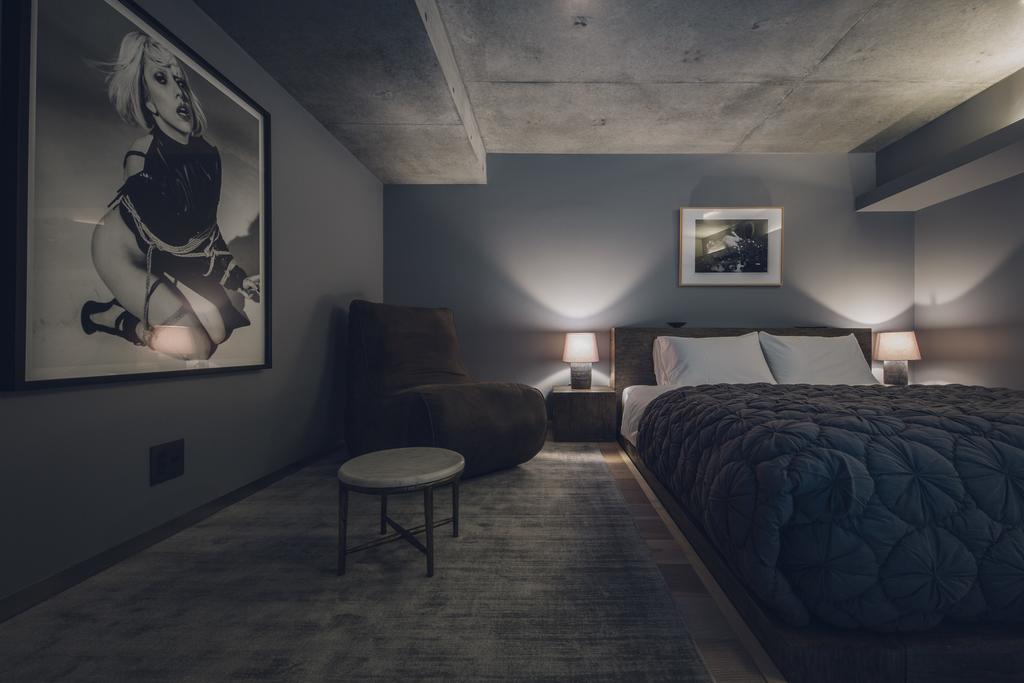
node hotel — Industrial Chic with Art
Set in a glass-and-concrete frame, node feels like a living gallery, hosting 60+ curated works alongside moody guest rooms of oak, marble, and iron. The lobby blooms with greenery and vintage design touches.
DNA Hotels Verdict: Art-driven and atmospheric, node is a cultural salon disguised as hotel.

The Millennials — Capsule Reinvented
In Kawaramachi, The Millennials reimagines capsule hotels with “Smart Pods” controlled by iPods, plus sleek co-working lounges and nightly “beer hour.” Minimalism meets tech for a futuristic yet social stay.
DNA Hotels Verdict: Capsule living elevated into design statement—efficient, stylish, communal.

Hotel Anteroom Kyoto — Living Gallery
Once a 1920s student hostel, now a minimalist hotel with rotating art exhibitions. Neutral-toned rooms keep calm, while nine “art rooms” immerse guests in unique creative worlds.
DNA Hotels Verdict: A cultural lens on Kyoto’s present—simple, evolving, art-led.
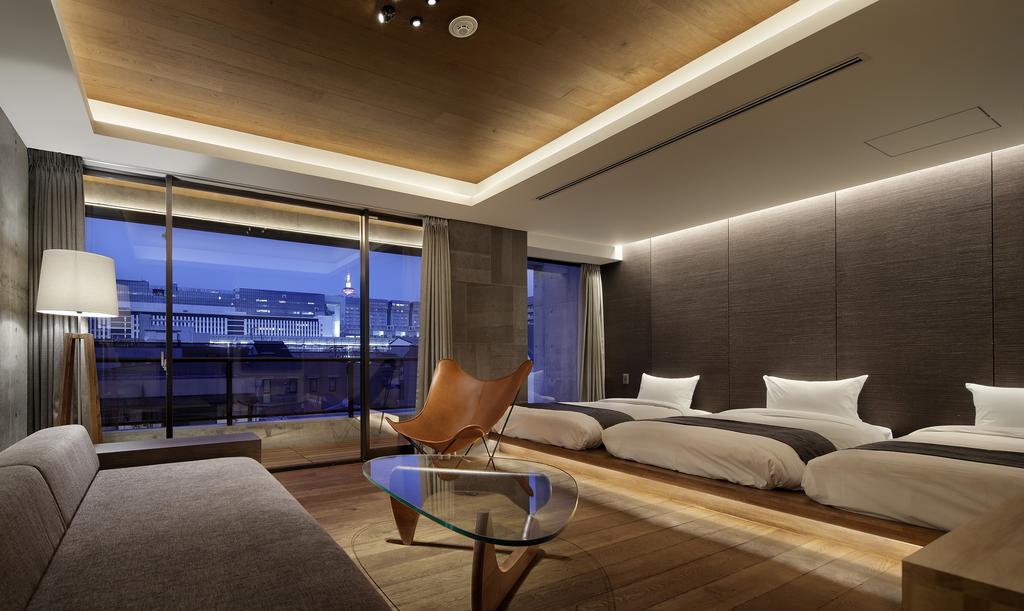
22 PIECES — Minimalist Concept Store
Near Kyoto Station, this boutique doubles as a design shop, with rooms that act as flexible living stages—equipped with kitchens, terraces, or loft beds. Objects curated in-house can be purchased and taken home.
DNA Hotels Verdict: Minimalism with memory—design you can live in and carry away.
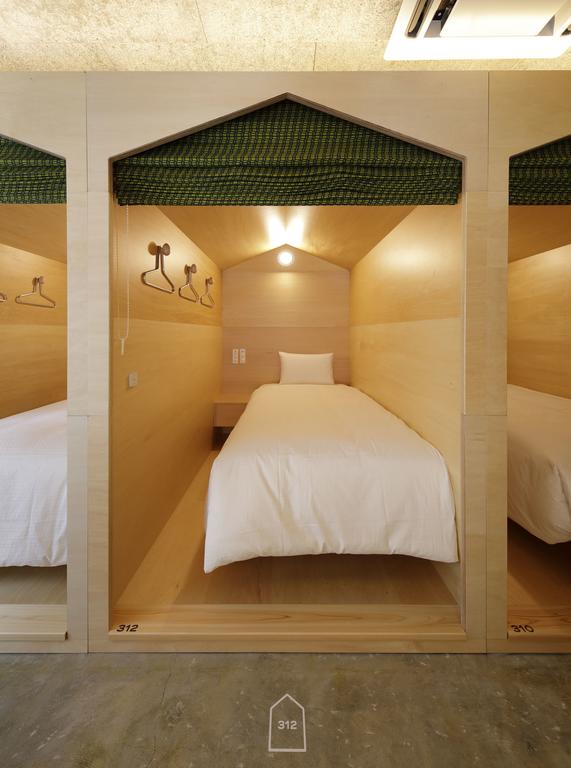
MAJA HOTEL Kyoto — Nordic Capsule Serenity
Finnish designer Harri Koskinen reinterprets capsule culture with timber façades, Marimekko blinds, and Café Aalto serving cinnamon rolls and salmon soup. A fusion of Japanese restraint and Nordic calm.
DNA Hotels Verdict: A cross-cultural capsule—quiet, stylish, and thoughtfully composed.
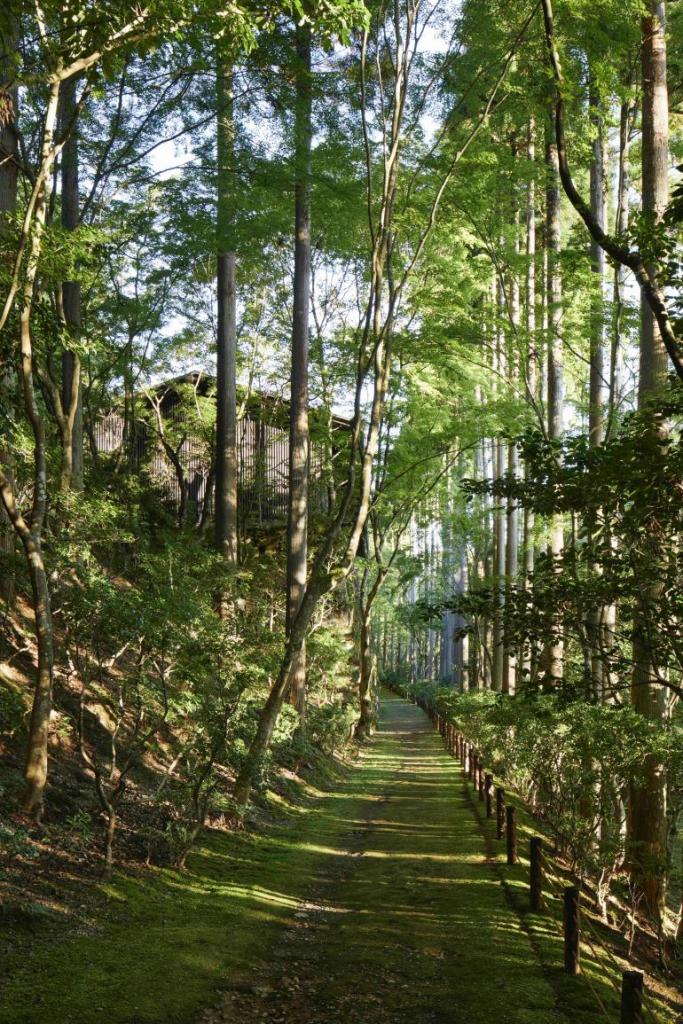
Aman Kyoto — Secret Garden Retreat
Kerry Hill’s final Aman project places low timber pavilions across a mossy 72-acre estate. Minimalist ryokan-inspired interiors blur into forest views, while kaiseki dining and cypress baths deepen the ritual.
DNA Hotels Verdict: A masterpiece of minimalism and memory—architecture as meditation.
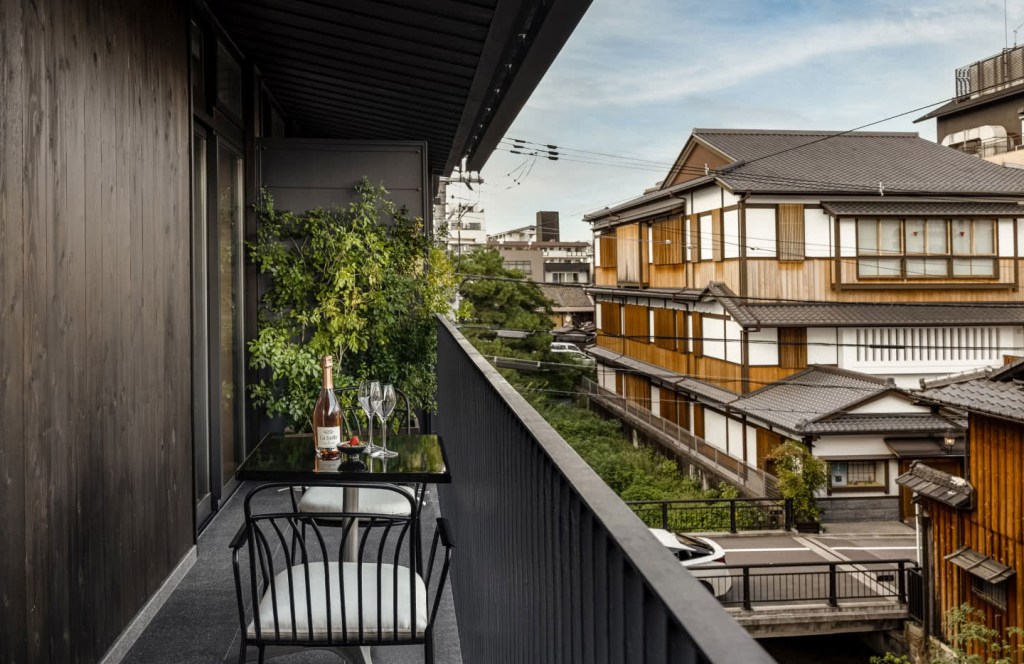
The Shinmonzen — Sleek Silence in Gion
Tadao Ando’s architecture and Rémi Tessier’s interiors create nine riverfront suites blending raw concrete, timber slats, and tatami comfort. Jean-Georges dining and riverside balconies refine the boutique scale.
DNA Hotels Verdict: Kyoto distilled—tradition pared down, reimagined with daring calm.
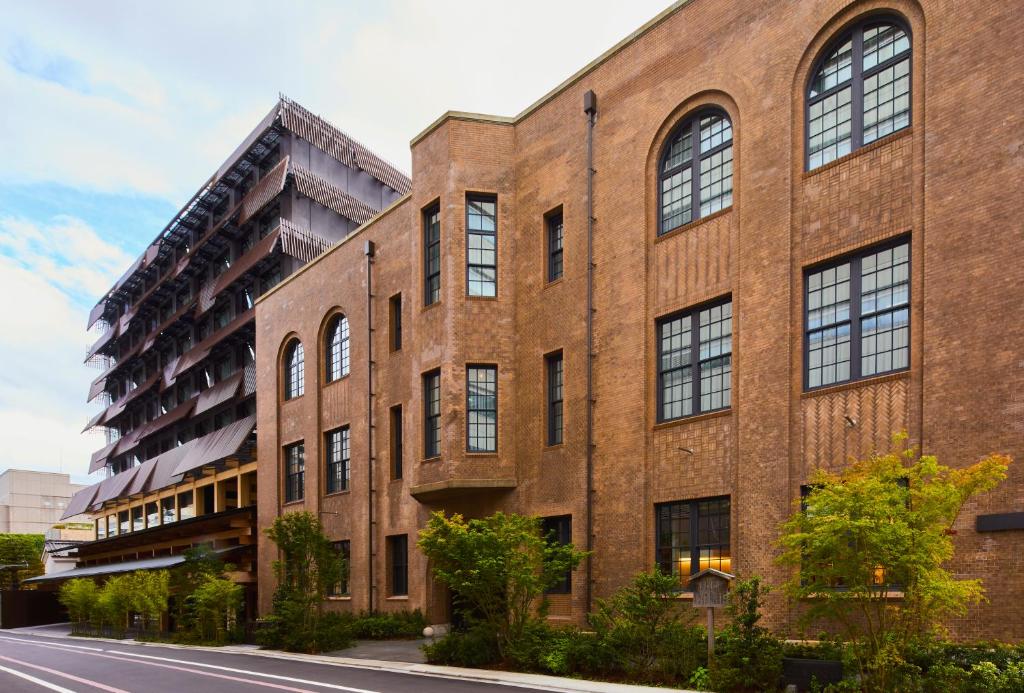
Ace Hotel Kyoto — Global Mashup
In a landmark 1926 building reworked by Kengo Kuma and Commune Design, Ace mixes Yoshida’s modernist bones with hip industrial interiors, retro art, and DJ-fueled lounges. It’s Kyoto as cultural stage.
DNA Hotels Verdict: A design collision of old and new—Ace at its boldest and most Kyoto.
DNA Hotels Wrap-Up
Kyoto’s design hotels form a spectrum: from Kanra’s crafted authenticity to Aman’s meditative minimalism, from The Shinmonzen’s distilled boutique to Ace’s buzzing cultural hub. Each is an architectural lens on the city, offering travelers a way to not just stay in Kyoto, but to experience its layered identity through space, texture, and design.
Although the list is pretty comprehensive, I can think of another one or two to add. Which one do you think is missing? Or is your favourite place to stay in Kyoto already here? Let me know: chiel@dnahotels.com.
 DOUBLEDOWN Hotels
Leave a comment