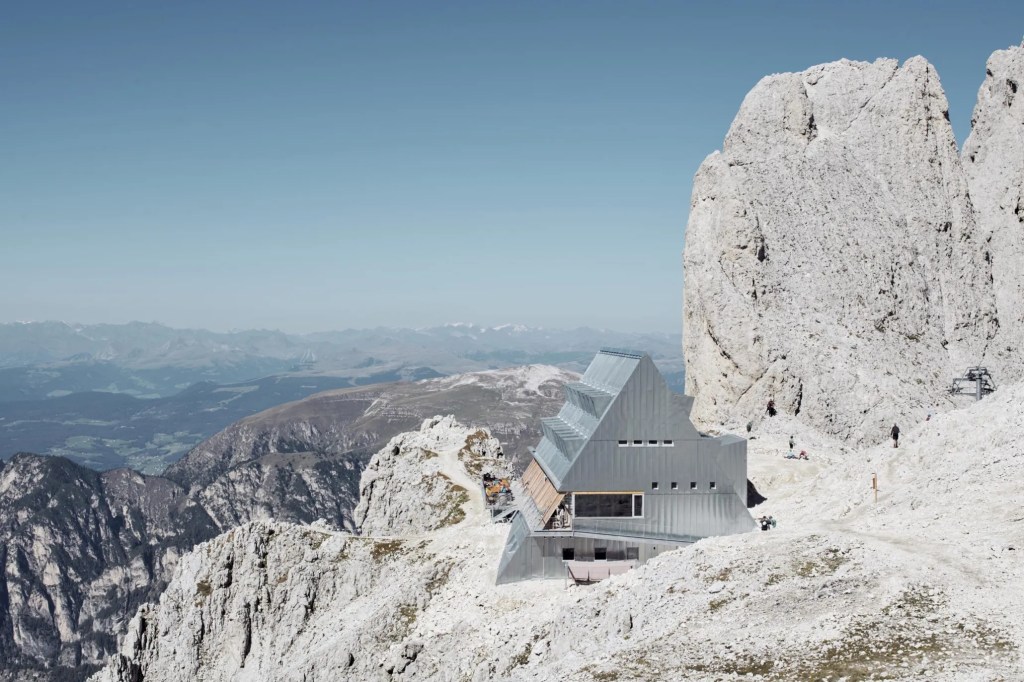
And why hotels with real environmental coherence — not slogans — will win the new era of discovery and direct bookings
The word “sustainability” has lost gravity.
It has been stretched, polished, diluted, and pasted onto so many corporate marketing campaigns that guests have learned to tune it out.
And yet —
in the actual architecture, operations, and authorship of independent hotels — sustainability is often the most honest expression of intent.
The question is no longer:
“Are you sustainable?”
It’s:
“Is sustainability part of your identity?”
And in the new AI-native discovery landscape, that distinction will separate the hotels that thrive from those that disappear.
Why AI will elevate sustainability — but not in the way people think
AI does not reward green slogans, badges, or leaf icons.
AI is not influenced by marketing language.
What AI looks for is coherence:
- Does the architecture reduce energy naturally?
- Do materials reflect place and climate?
- Are operations aligned with the spatial logic?
- Does the experience encourage slow, local, intentional living?
- Does the hotel’s story match its footprint?
AI reads thousands of pages — not to “rank” hotels, but to understand what they are.
And sustainable hotels express something that AI can easily identify:
integrity
A hotel that is sustainable in architecture, materiality, operations and guest experience is — by definition — a hotel with:
- authorship
- clarity
- intention
- long-term sensibility
- coherence between design and behaviour
This is exactly what AI is built to detect.
Guests don’t want greenwashing. They want alignment.
Travelers are not searching for:
- “eco-friendly master switch”
- “towel reuse program”
- “carbon neutral offset partner”
Those are operational afterthoughts.
Guests search for:
“a nature-integrated retreat with calm energy.”
“a hotel built from local stone and wood.”
“a place where sustainability feels natural, not forced.”
“a quiet lodge that blends into the landscape.”
“a slow, thoughtful stay rooted in place.”
These are emotional requests.
These are identity-based requests.
These are natural-language requests.
And AI will only surface hotels that match the identity behind the request — not the marketing.
Sustainability as design authorship
The most powerful sustainability signals come from:
1. Architecture
Buildings that respond to climate instead of fighting it —
orientation, shading, cooling, thermal mass, natural ventilation.
2. Materiality
Local stone, clay, timber, earth.
Lower transport, lower footprint, higher sense of place.
3. Vibe
Quiet, contemplative, nature-forward energies.
AI understands this through repeated mention in texts.
4. Operations
Waste systems, energy choices, water reuse —
only when aligned with design, not added afterward.
5. Rituals
Outdoor bathing, stargazing, slow breakfast, farm-to-table —
practices that reduce resource intensity by design.
These are identity cues, not virtue cues.
This is why MAI (the Meaningful Architectural Index) treats sustainability as a semantic dimension, not a marketing claim.
Why responsible design will drive direct bookings
The most powerful guests in 2026 are:
- design literate
- emotionally perceptive
- environmentally aware
- distrustful of marketing
- inspired by place-based hospitality
When these guests ask AI for:
- a nature-led stay
- something calm and environmentally sensitive
- a design retreat integrated with the landscape
AI will match them with meaning, not badges.
And hotels that express sustainability as identity — not performance — will “click” instantly.
This drives:
- higher trust
- higher willingness to book direct
- higher satisfaction
- fewer mismatched guests
- stronger repeat stays
In the next era, sustainability is not an add-on.
It is a distribution advantage.
Sustainability in MAI (Meaningful Architectural Index)
In MAI, sustainability is expressed through:
- nature integration
- local materiality
- low-impact architecture
- ecological coherence
- regenerative operations
- slow-living experience design
- spatial restraint and intentionality
These are signals AI can read, understand, and act upon.
When a hotel expresses its sustainability in this deeper way, it becomes:
- discoverable
- matchable
- legible
- meaning-rich
- semantically distinct
This is what allows design-led independents to stand out and win direct bookings in an AI-first world.
The new rule: sustainability must be expressed, not claimed
If your hotel’s sustainability is:
- visible in the materials
- felt in the space
- reflected in the rituals
- embodied in the architecture
- woven into the guest’s emotional state
You already have an advantage.
Your task now is to make that identity:
- articulate
- readable
- semantic
- structured
- consistent across the internet
So AI can actually understand it—and surface you.
Do you operate a hotel with real environmental coherence? Message me.
Next in the series:
Article #6 — “The End of SEO Hotels: Why Mentions, Not Keywords, Will Shape the New Direct-Booking Funnel.”
 DOUBLEDOWN Hotels
Leave a comment