Why independent identity — not sub-brands — is the real path forward in the AI era
Barrière just announced the transformation of “Barrière Hotels” into Barrière Collection — reorganised into four sub-brands: Signature, Heritage, Address and Premium.
A century-old group deserves evolution.
But the strategy reveals something deeper happening across hospitality:
The industry keeps adding labels
when guests (and AI) are looking for identity.
And this is exactly where the disconnect lies.
1. “Collection” has become the most overused word in hospitality
Almost every major chain now has:
- a “collection”
- a “curated collection”
- a “luxury collection”
- an “authentic collection”
- a “signature collection”
But a “collection of collections” doesn’t create uniqueness.
It creates distance — between the hotel and its place.
In Barrière’s case, “Signature Collection” is simply Fouquet’s.
So why not just call it Fouquet’s?
Why stack a hierarchy that suggests:
this collection is more special than that collection
even though it all belongs to the same brand?
2. Heritage isn’t a “category” — it’s a story
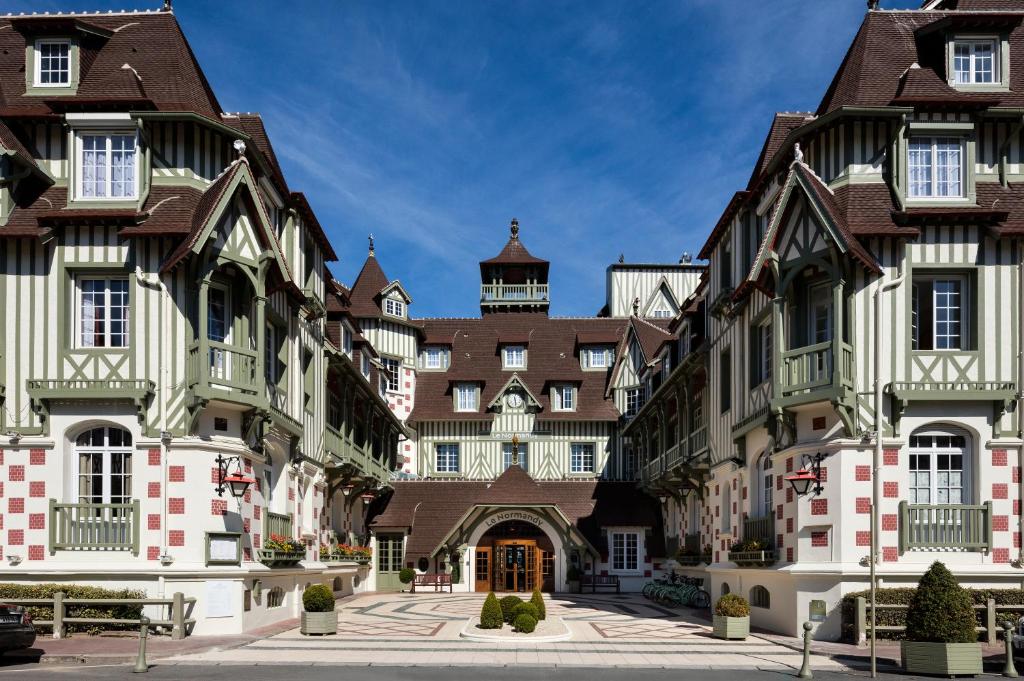
The Heritage Collection includes Le Normandy, Le Majestic, L’Hermitage…
These hotels already have enormous emotional capital.
These are independent brands in their own right.
What makes them compelling?
- distinctive architecture
- location-specific ritual
- cultural memory
- the slightly faded but irresistible charm of true French seaside history
Flattening them into a “Heritage Collection” reduces identity, not strengthens it.
Individually, many of these hotels would excel inside the DNA Hotels frame:
archival, character-rich, story-bearing, almost Wes Anderson–esque in their eccentricity.
They don’t need a collection.
They need clarity.
3. “Address Collection” (Maison Barrière) is actually a different brand entirely
Maison Barrière Vendôme is a boutique concept built around 26 rooms inspired by 26 iconic women.
Executed well, that’s a tight, authored idea —
a brand that could live on its own.
But folded into the Barrière hierarchy as a “collection”?
Confusing.
And the upcoming Lisbon opening raises the real question:
Does Lisbon — a city overflowing with natural authenticity — need a
French-branded luxury boutique hotel concept imported into it?
Brand layering creates noise, not meaning.
4. “Premium Collection” dilutes both ends of the spectrum
“Premium” is neither luxury nor lifestyle.
It signals:
not quite luxury, but trying
or
accessible, but please read us as elevated
This downgrades the core brand and overpromises for the Premium properties.
The properties themselves?
Perfectly fine.
Often beautifully located.
But they would perform better as distinct, authored, place-led identities, not in a catch-all “Premium” category.
5. The deeper issue: brand architecture that hides hotel architecture
In 2026, the risk isn’t not having enough sub-brands.
The risk is becoming semantically unreadable —
to guests and to AI.
Travelers no longer say:
“Show me a 5-star hotel in Cannes.”
They say:
“Show me a lively, cinematic seaside hotel with history.”
“Find me a quiet, intimate boutique hotel with authorship.”
“A design-led residence with soul, not a corporate vibe.”
AI matches identity, not category grids.
When you turn distinctive hotels into:
- Signature
- Heritage
- Address
- Premium
…you flatten the very meaning AI is now required to read.
Brand architecture becomes a barrier (yes, the irony) to discoverability.
6. The opportunity Barrière (and others) actually have
Barrière has emotional, cultural and architectural gold in its portfolio.
But the future advantage won’t come from:
- repositionings
- category pyramids
- umbrella names
- layered sub-brands
It will come from authored, place-specific identities made legible to AI:
- Le Normandy as its own universe
- Le Majestic as its own cinematic stage
- L’Hermitage as its own coastal memory
- Maison Vendôme as a standalone conceptual brand
- and others following their own narratives
This is what travelers respond to.
And it is what AI can actually understand.
The shift: from brand hierarchy → to semantic identity
The hotel industry is fighting yesterday’s war with brand architecture.
But the new discovery funnel is:
Describe → Interpret → Match → Book
And meaning — not brand grouping — is the differentiator.
This is why independent hotels and small groups are suddenly in a powerful position:
- authored architecture
- coherent vibe
- narrative clarity
- specificity
- emotional identity
- a sense of place
Barrière has all the ingredients.
The question is whether they will express them individually —
or bury them under more “collections.”
If you run or develop independent hotels: simplify your brand; strengthen your identity.
Your competitive advantage is not being part of a collection.
It’s being legible — to guests, to AI, and to the future of discovery.
And this is exactly where DNA Hotels is placing its energy:
helping authored hotels express meaning so they stay visible in the next era.
 DOUBLEDOWN Hotels
Leave a comment